
Extended Producer Responsibility for Textiles

Extended Producer Responsibility for Textiles – Federal Ministry for the Environment Presents Key Points for German Textile Law

With the policy paper published on March 27, 2026, the Federal Ministry for the Environment has, for the first time, outlined the planned national implementation of Extended Producer Responsibility (EPR) in the textile sector.

The introduction of this producer responsibility was already outlined in the federal government’s coalition agreement and was made mandatory under EU law by Directive (EU) 2025/1892, which amended the Waste Framework Directive and entered into force on October 16, 2025. The future German Textile Act is intended not only to implement the requirements of European law but also to address current distortions in the German used textile market, which are attributable in particular to the growth of fast fashion.

The policy paper is open for comment from all stakeholders until April 24, 2026. The regulations outlined therein will have significant implications for the entire textile value chain—from product design and placing on the market to disposal and recycling.

I. Background and Objectives

Extended producer responsibility for textiles is part of a broader set of measures aimed at making the textile sector more sustainable and circular, including the national circular economy strategy, the EU Waste Shipment Regulation, and EU ecodesign requirements. A key concern of the Federal Ministry for the Environment is to avoid creating excessive bureaucracy during national implementation. Therefore, existing, efficient collection and administrative structures should primarily be utilized, adapted to the textile sector, and further developed. This pragmatic approach avoids a complete overhaul of the used textile sector and combines proven structures with the new EU legal requirements.

II. Scope of Application

The scope of the proposed Textiles Act covers clothing, clothing accessories, home textiles, and footwear, thereby fully implementing the Combined Nomenclature codes (CN codes) set forth in Directive (EU) 2025/1892. This also includes clothing that is no longer wearable, meaning that approximately 96% of the used textiles currently collected from private households are covered.

Other product groups, such as bags, plush toys, and stuffed animals, may continue to be collected together with textiles subject to extended producer responsibility if this is agreed upon between the public waste management authority and the producer responsibility organizations; however, they are not subject to extended producer responsibility, meaning there are no collection or recycling obligations for their production.

III. Obligations of producers

Textile producers, as the entities responsible for extended producer responsibility, play a central role in the implementation of these measures.

  • Definition of producer and registration requirement: Under the proposed Textile Act, a “producer” is any company that first places textiles on the German market. This may be the producer, the importer, or the distributor of the textiles in question. All producers are required to register with the competent authority before placing their products on the market. Producers that are not based in Germany must appoint an authorized representative to fulfill their obligations.
  • Participation in a producer responsibility organization: Producers must participate in a producer responsibility organization that carries out the tasks of extended producer responsibility. This implements the EU legal obligation to establish waste collection systems for used textiles and to bear the costs, in particular for collection, transport, sorting, and recovery. Producers may choose among several producer responsibility organizations that are being established; they may also fulfill extended producer responsibility individually by establishing their own organization.
  • Financial responsibility: Textile producers bear extended producer responsibility and are therefore financially responsible, among other things, for the collection, transport, sorting, and proper recycling of used textiles. This financial responsibility is managed through membership fees paid to producer responsibility organizations. The calculation of contributions is primarily based on the quantity of textiles placed on the market for the first time. In addition, qualitative criteria under Article 8a of the Waste Framework Directive must be taken into account, such as durability, reparability, reusability, recyclability, and the presence of hazardous substances. The more environmentally friendly and sustainable the textile product is, the lower the contribution to be paid, thereby creating financial incentives for more environmentally friendly product design. The producer responsibility organizations report annually to the Federal Environment Agency on the eco-modulation of contributions. In the future, fee differentials, bonus-malus systems, or fund models may be implemented.
  • Effects for Online Platform and Fulfillment Service Providers involvement: Online platforms may only allow products to be offered on their marketplaces if the producer of the textiles is properly registered. Fulfillment service providers must also verify whether producers are registered. This regulation corresponds to the mechanism established under the Packaging Act and is intended to ensure compliance with manufacturers’ obligations, particularly in online commerce.

IV. Collection of used textiles

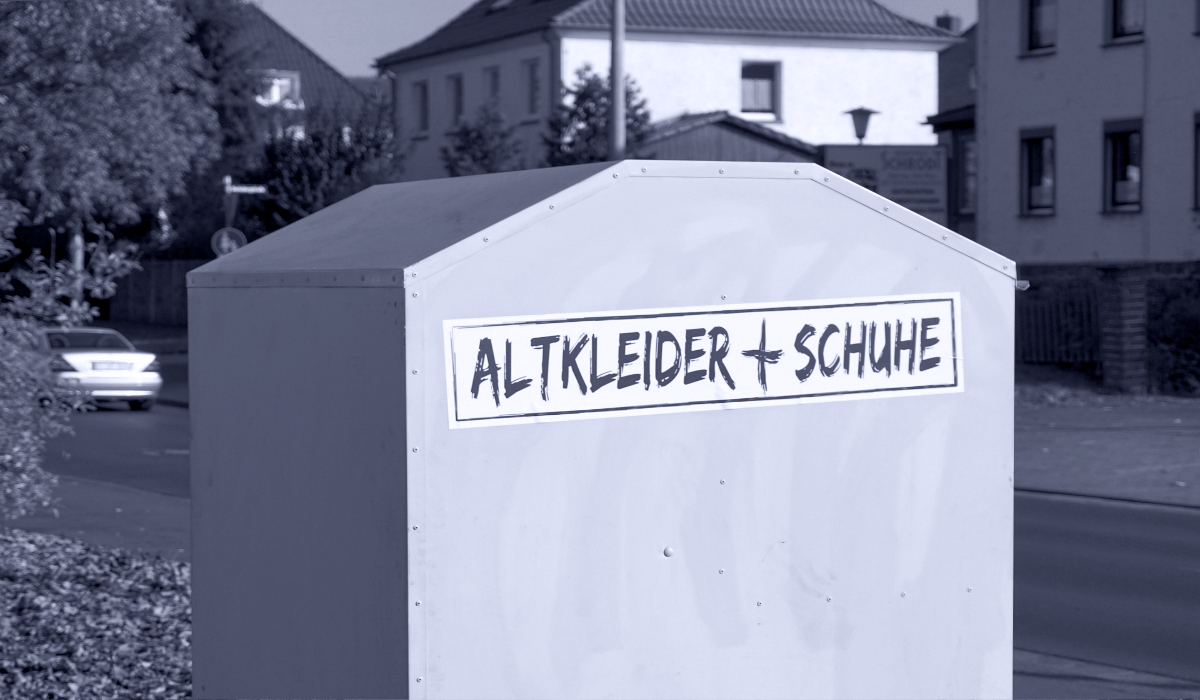
Organizations responsible for producer responsibility are responsible for the comprehensive collection of used textiles. Each organization must achieve a collection rate of 70% through its collection and take-back network, calculated based on the quantity of materials first made available by affiliated manufacturers in the previous year. There are currently no plans to require retailers to accept returns at the point of sale.

Public waste management authorities are obligated to cooperate with a producer responsibility organization; however, they may “opt out” and declare for a calendar year that they will carry out the recovery of the collected used textiles themselves.

Non-profit collectors under Section 3(17) of the KrWG remain exempt under EU law and may continue to collect on a voluntary basis without being required to file a report under Section 18 of the KrWG. Although they must join a producer responsibility organization, they may decide for themselves whether to hand over the collected used textiles.

Commercial collectors under Section 3(18) of the KrWG and distributors may continue to collect used textiles as before, but must join a producer responsibility organization and hand over the collected used textiles to it for further recycling.

Thrift stores, social department stores, and clothing banks are not affected, provided they only accept textiles that are still wearable, as these do not constitute waste.

V. Sorting and recycling of used textiles

Collected used textiles must first undergo an initial screening to remove foreign and disruptive materials and then be properly recycled in accordance with the waste hierarchy. Sorting is mandatory to ensure high-quality preparation for reuse in terms of both quantity and quality. Suitable used textiles can thereby cease to be considered waste.

The following targets must be achieved in the future:

•    Recovery rate (preparation for reuse + recycling + other recovery / total collected volume): 95%

•    Recycling rate (preparation for reuse + recycling / total collected volume): 85%

The targets must be reviewed regularly by the legislature and adjusted as necessary. In this context, reporting should also specify the quantities that were sent for fiber-to-fiber recycling.

When exporting used textiles, extensive documentation must be provided regarding, for example, sales, sorting procedures, and the contents of the shipment. Additionally, the Waste Shipment Ordinance applies, with stricter requirements in the future, including for the export of non-hazardous waste to non-OECD countries.

Conclusion and outlook

The key issues paper published on March 27, 2026, marks a fundamental systemic change in the German used textile sector and will have far-reaching implications for manufacturers, producer responsibility organizations, collection operators, and the recycling industry.

The approach of utilizing and further developing existing collection systems is generally to be welcomed. At the same time, the ambitious targets set high standards that go beyond the minimum requirements under EU law. Eco-modulation creates important incentives for more sustainable product design and can help curb fast fashion.

The implementation deadline for Directive (EU) 2025/1892 is June 17, 2027. The key issues paper is open for comments until April 24, 2026. Stakeholders are well advised to use this period to highlight outstanding issues and ambiguities. At the same time, they should begin preparations for implementing the new requirements now in order to be compliant well before the law takes effect.

Do you have any questions about this news, or would you like to discuss it with the author? Please contact: Michael Öttinger

13. April 2026 Michael Öttinger

Extended producer responsibility for textiles and footwear

On 05.07. 2023, the EU Commission published a proposal to revise the EU Waste Framework Directive (Directive 2008/98 EC of the European Parliament and of the Council of 19 November 2008 on waste), which provides for far-reaching regulations for manufacturers of textiles as well as footwear and the handling of used textiles. Whether this can really create an incentive for the development of more durable products, the improvement of recyclability and thus the reduction of waste generation, as hoped by the EU Commission, remains to be seen.

Within the framework of the Green Deal and the Circular Economy Action Plan, the Commission sees a considerable need to implement circularity-related requirements in order to accelerate the transition to resource-conserving waste management in the textile industry as well. According to the basic principles of waste management, the prevention of waste is always the primary goal. However, where textile waste is generated, greater attention is to be paid in future to reusability and recycling.

A. Background

The Proposal for a Directive of the European Parliament and of the Council amending Directive 2008/98/EC on waste (COM(2023) 420 final) provides, among other aspects, for the introduction of mandatory and detailed regulations with regard to textiles and footwear, which concretize the general framework for extended producer responsibility from Art. 8 and 8a of the Waste Framework Directive for these product groups. This is intended to achieve a high level of environmental and health protection in the Union and to ensure a functioning circular economy through collection, sorting, reuse, preparation for reuse and recycling. In addition, this is intended to provide incentives to consider the principles of the circular economy as early as the production of the products, thus bringing to the market long-lasting products rather than “fast fashion”.

B. Material and personal scope of application

According to Annex IVc of the draft, the new requirements are to apply to textiles (such as clothing, blankets, curtains, bed and table linen, hats), leather goods and footwear.

In terms of the personal scope of application, the manufacturer is at the center of the regulatory efforts. According to Art. 3 No. 4b of the draft, manufacturers in this sense are to be all natural and legal persons who

  • are established in a Member State and manufactures textile, textile-related and footwear products listed in Annex IVc under their own name or trademark, or have them designed or manufactured and supply them for the first time under their own name or trademark within the territory of that Member State
  • are established in a Member State and resell within the territory of that Member State, under their own name or trademark, textile, textile-related and footwear products listed in Annex IVc manufactured by other producers, on which the name, brand or trademark of the manufacturer does not appear
  • are established in a Member State and supply for the first time in that Member State on a professional basis, textile, textile-related and footwear products listed in Annex IVc from another Member State or from a third country or
  • sell textile, textile-related and footwear products listed in Annex IVc by means of distance communication directly to end-users, including private households or other than private households, in a Member State, and are established in another Member State or in a third country.

According to the explicit wording, companies with less than ten employees and an annual turnover and balance sheet total of less than two million euros, as well as self-employed tailors are excluded. In addition, those actors are not covered who (exclusively) place used textile and footwear products or those that consist entirely or partially of waste products on the market.

C. Overview of planned obligations

Essentially, the future obligations of manufacturers in the context of their extended producer responsibility and the producer responsibility organizations that are yet to be established in the future are found in Art. 22 a to c of the draft. Art. 22 d of the draft also contains detailed requirements for the further handling of collected textile waste.

  • Establishment of a register

In order to effectively monitor compliance with the requirements of extended producer responsibility, Art. 22b of the draft requires Member States to establish a register of manufacturers, as is already known in Germany, for example, for packaging (LUCID) and electrical appliances and batteries (register at the Stiftung EAR). Without a brand and product-related registration, manufacturers will no longer be allowed to place affected products on the market from the date of application.

  • Obligation of manufacturers to bear the costs

According to Art. 22a para. 4 of the draft, the Member States must ensure that in future the manufacturers concerned bear the costs of the collection and subsequent waste management of the waste listed in Annex IVc of the Directive and also financially contribute to studies on the composition of unsorted municipal waste, to information campaigns, for reporting to the competent authorities and proportionately for research into new collection and recycling processes.

  • Establishment of so-called producer responsibility organizations

According to Art. 22c of the draft, the Member States must also ensure that manufacturers of affected products appoint a so-called producer responsibility organization to fulfill the obligations of extended producer responsibility on their behalf. These organizations require regulatory approval to fulfill the obligations they assume on behalf of manufacturers.

As part of their activities, producer responsibility organizations will be required to base their participation fees to be paid by manufacturers on the degree of environmental sustainability and recyclability of the products involved. In addition, when calculating the participation fee, they must take appropriate account of any profits that may arise from reuse, preparation for reuse or the value of secondary raw materials from recycled used textiles.

  • Establishment of separate collection systems

By 01.01.2025 at the latest, separate collection systems for textiles must be set up in all Member States in order to avoid mixing with unsorted municipal waste, as this leads (as is currently the case) to an extensive loss of reusable and recyclable materials through disposal.

In this context, it should be ensured that producer responsibility organizations may not refuse the participation of social enterprises and other operators of reuse facilities in the separate collection system.

Furthermore, social enterprises should be able to continue to maintain and operate their own separate collection facilities and they should not be disadvantaged in the choice of location of separate collection facilities. Furthermore, the social enterprises and social economy institutions that are part of the collection points are not obliged to hand over the used textiles, textile-related products and footwear collected by them to the producer responsibility organizations.

  • Comprehensive information and documentation obligations

The information obligations to be fulfilled by producer responsibility organizations pursuant to Art. 22c(13) of the draft include advice to consumers on methods of waste prevention and care of the products during their period of use, on reuse and repair options for textiles and footwear, and consumer information on the separate collection of used textiles and footwear. In addition, information must also be provided on the impact of textile production, especially so-called fast-fashion practices on the environment, human health and related problematic working conditions, recycling and the effects of improper disposal of textile and footwear waste.

D. Transition periods

In order to establish the above-mentioned extended producer responsibility instruments, the Commission grants the Member States a period of up to 30 months after the entry into force of the amending Directive, according to Art. 22 a para. 8 of the draft. The Commission proposal will now be discussed by the European Parliament and the Council as part of the ordinary legislative procedure. Due to the still very early stage of the draft, it is currently impossible to predict how long the legislative procedure will ultimately take.

Outlook

The EU Commission’s proposal is surprising in view of its planned systematic position in the Waste Framework Directive. This is particularly surprising because in the areas of extended producer responsibility for packaging and batteries, which are also harmonized throughout the EU, there is a move away from directives towards directly applicable regulations. It is equally surprising that the EU Commission leaves out topics such as the fiber labeling required for the closed-loop management of textiles, as well as a clear regulation on the demarcation of the scope of application of the electrical equipment law from the present textile law, although this would be desirable in view of the increasing proportion of so-called “smart textiles” and would be absolutely necessary for a smooth interaction of the systems.

In light of this, it remains to be seen how the institutions involved in the legislative process will position themselves and whether the EU Commission’s proposal for a revision of the Textile Labelling Regulation (EU) No. 1007/2011, planned for Q4/2023, will not after all combine the design criteria planned there with the specifications proposed here for fulfilling extended producer responsibility. In terms of transparency and coherence, this would certainly be desirable.

Do you have any questions about this news, or would you like to discuss it with the author? Please contact: Michael Öttinger


18. September 2023 Michael Öttinger